
Small Towns 2.0
We Love Small Town Texas

Originally posted in December 2018
Someone asked me a few years ago why I love working in Small Towns in Texas so much: it honestly took me aback. It was the attitude that surprised me, and having never been challenged on this point, I had assumed everyone loved history as much as I did. It turns out they don’t, or at least have a different understanding of why this matters.
I’m just off-beat enough to think that everyone should value the stories of the men and women who settled their towns, planted crops, built homes and stores, and scratched a living from the soil. These people and their stories have always fascinated me, and I just figured there was honor in celebrating their lives and stories of struggle, perseverance, and survival. I still do.
Growing up, I was surrounded by history. My dad was a World War II historian who served in the Air Force on several Strategic Air Command bases. My mom was a history teacher, and I remember on cold Colorado nights, when other families were watching All in the Family, our family would sit listening to my dad read great fiction from Dickens to Dumas, and historical novels by authors like Kenneth Roberts and James Michener. Yup, we were that family!
So taking a metaview of the world has always been a natural act for me: I often take this for granted. Identifying historical events and drawing patterns has always been an easy lift for me, so when it came to selecting a graduate thesis topic, sorting some of the tactics of asymmetric partisan warfare in the Southern Colonies during the Revolutionary War was a pretty natural extension. One of my more recent projects has been tracing ancestors during the War of 1812—yup, that’s the history geek in me popping up again.
I interact with stories of historic places on a deeply personal level: I stand and walk and touch and ponder at places like Little Big Horn National Monument, The Battery in Charleston, the Vietnam Memorial in Washington D.C. or the Gettysburg Battlefield. I experience something mystical as my brain conjures images of men and women living, hoping, celebrating, fighting, and dying in these places. I spend a lot of time asking the “why” questions, hoping and praying that we’re all learning from these immensely human and teachable moments in history.
Texas has a massive piece of those amazing and tragic stories. It’s a large state full of different cultures and different experiences, and what makes it so special is that all of it matters: all of it. The Story of Texas is a tapestry of joy, heartache, toil, rest, reward, failure, disappointment, injustice and restoration. It’s a gumbo of advances and setbacks, of bravery and foolish bravado, of moral courage and cowardice. Some would say it’s not very different from the human story: what’s undeniable is that it is uniquely Texas, a unique and important idea which lives itself out in the histories of places like Bastrop, Nacogdoches, Gonzales, and San Antonio. From Van Horn to Beaumont and Dalhart to Macallen, every settlement and every town bears witness to an important struggle. For every town we all know, there are ten others with history just as colorful waiting to be discovered, and if we lose these stories we never get them back.
We should all take the story of Texas personally.
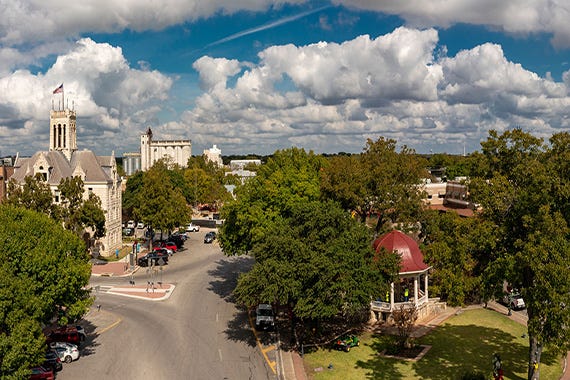
Our small towns in Texas can be our greatest inspirations or a source of our greatest disappointments: it seems there’s seldom any middle ground. Little moves have big consequences in smaller towns, and sometimes the old cliche about just waiting for a couple of retirements or funerals isn’t far enough from the truth. I’m not alone in my enthusiasm for small town stories, but I have to confess it can be hard to work in small towns unless the leaders have a passion to preserve the past while they chart a part well into the future. That is a very very hard thing to do.
Our firm set out deliberately to undertake transformational projects and to not apologize for bringing big city development skills to smaller communities around the state. We develop projects that stand respectfully in high profile places, shoulder to shoulder with historic buildings, and while they paying homage to the past, they’re built to be the go-to space for businesses, shops, and homes for the next 150 years.
That’s what we do.
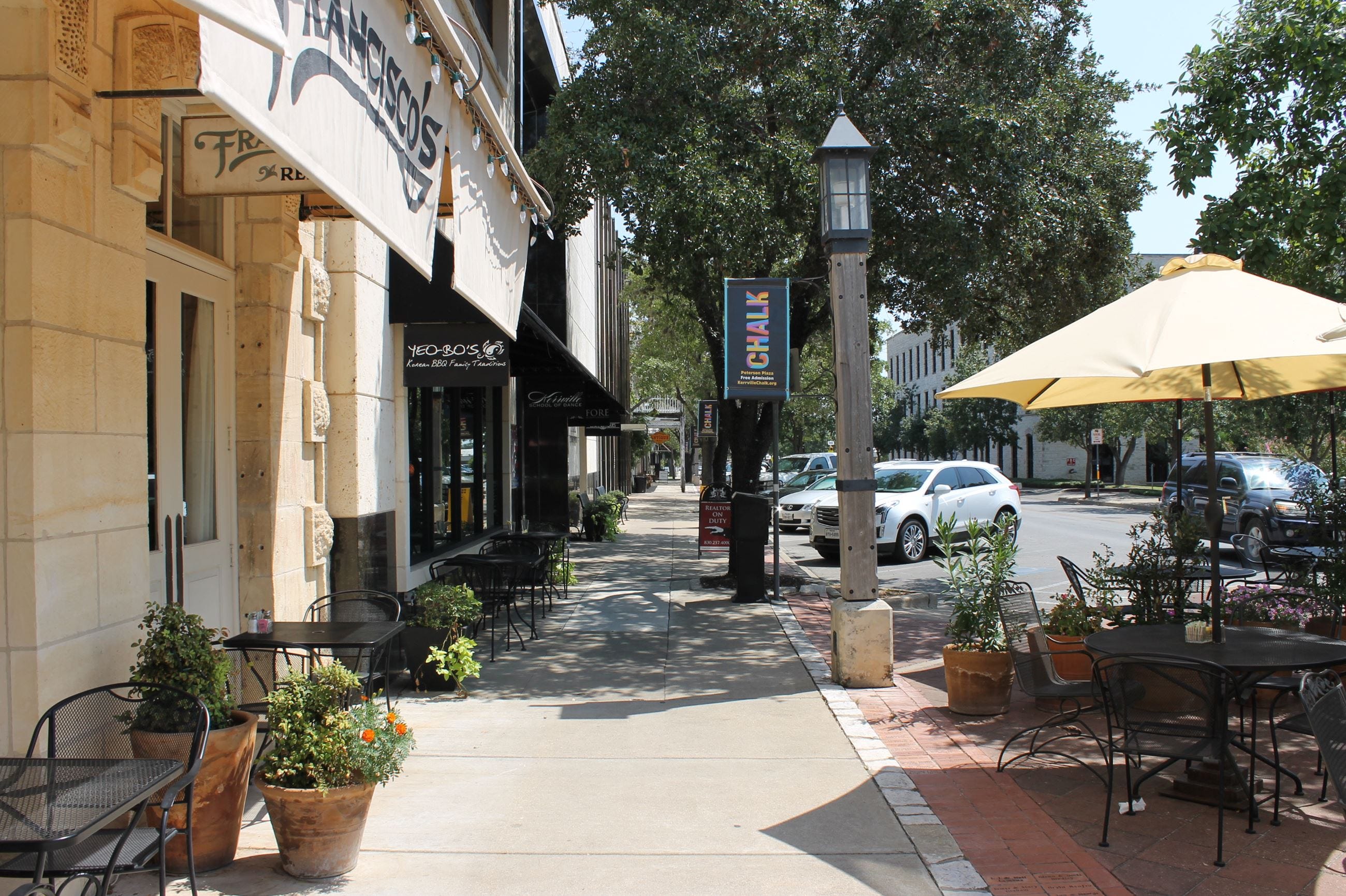
These projects often disrupt the status quo, set new trajectories, and create new opportunities for the people in the communities where we work: we do this on purpose. We explode traditional myths about what housing is and is not, we anchor our projects around vital public realm areas like rivers, lakes, creeks, parks, trails and open space. For communities that want solutions that create “more of the same,” we’re not a good fit. We’ve never once seen bricks and sticks heal a community; we’ve seen responsible leaders with a vision of the future do this dozens of times. These people are heroes to us.
We can’t transform a community by building buildings: what we can do is lead important conversations that develop community vision, which in turn come to life in new assets where people can bring about a new future. We can incorporate the stories of the people who made these places, reconnect the parts of these communities that have been cut off, and inspire great public spaces to be enjoyed by everyone regardless of age or status. We can teach and train Economic Development teams around the state about how they can attract private capital, create jobs, and induce the right things without selling their birthrights. We can demonstrate the impact of short-sighted media-driven decision making and it’s agonizing impact on small towns through case studies of other communities who’ve done this wrong.
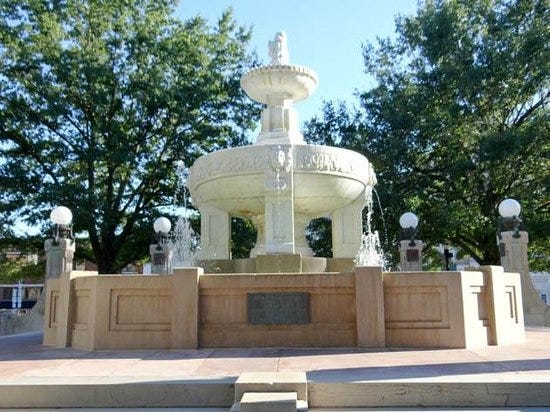
We call this approach to mixed-use lifestyle development our Small Town 2.0 Project, and we use these new population nodes in suburbs or in rural communities to connect people to great public spaces such as courthouses, hotels and conference centers, town centers, libraries, churches, and schools. Our developments are built at human scale, something that forces our design teams to interact naturally with open space plans, pedestrian traffic, and automobile-optional lifestyles. Instead of building to the edges of the property line and going as high as we possibly can to “maximize” the built spaces, we ask first how people will interact with structures, and then build around those public realm plans. It’s not revolutionary, because it’s done properly in places all over the world, but it sure feels counter-cultural in modern-day America.
We actually think that’s a compliment.
We are excited to see a significant uptick in interest for living in rural America; these cultural moves are long overdue. The Farm-to-Table movement and a recognition of the corporate food culture has opened the eyes of millions of Americans seeking alternatives to big city life, and they are looking for small towns where they can move and make a difference. The proliferation of farmer’s markets, food co-ops, community gardens, and sustainable communities points to this yearning for a return to a simpler life where we’re more connected to our place and to our neighbors. Men and women are coming back to small towns looking for housing options, jobs to support themselves and their families, places to invest and open businesses, and meaningful community organizations committed to advancing the long-term interests of these towns. They’re asking a lot of questions because they’re doers, not talkers: they are the future of Small Town Texas, and it’s up to us to activate and engage them.\
The challenge to all of us who do this work is simple and direct: will this new demand for what we have to offer find us prepared to think about the next 150 years? When we build an asset, it’s going to outlive us, and it had better be done correctly—designed to thrive, to adapt, and to endure.
Will these new residents find people ready to embrace new (and old) ideas about how to work and live, or will they find disgruntled and frustrated city leaders making excuses about why they aren’t big enough, sophisticated enough, or smart enough to compete in 21st Century America? That’s a hard question to ask, and even harder to answer honestly: we all have some wood to chop.
The State of Texas has equipped its citizens with a raft of economic development tools from a legislative level. Each community has the opportunity and the responsibility to use those tools effectively to build, rebuild, and create a better future for their voters. Instead of incentivizing another big box developer to drop a giant retail store outside town on the bypass, we’ve been preaching about fixing the drainage, sidewalks and public parking problems that are driving real owners and investors off of Main Street.
Instead of sending profits to Minneapolis, Chicago, or Atlanta, celebrate with local business owners as they invest and succeed creating a new future in your own town. That’s what Economic Development looks like when it’s done right: it’s not sexy, but it works, and when we all do it right, it’s amazing what we can accomplish as we grow into a different future.
Smart economic development leaders figure out how to team up, build on their strengths and their assets, and rise above the noise of the “also-rans.” They recognize the power of entrepreneurship programs. They acknowledge that 90% of the new jobs in their communities will be created by businesses already on the ground, so instead of chasing shiny new employers, they start with the not-so-sexy block and tackle work of building strong Business Retention and Expansion programs. And then they call us, because our mixed-use centers cater to smart, energetic, local business operators and entrepreneurs who need space to sell products and services to their neighbors, and we speak their language.
The offices, shops, hotels, lofts, apartments and homes that we build are simply the next chapter in these amazing stories. They are places for people who stand on the shoulders of others and insist there’s a better way to solve the world’s problems. The next generation of Small Town Texas is bringing their energy, passion, and persistence just like the men and women who came on horseback and in wagons to stake claims and tend the land. And if there’s anything we can learn from those stories, it’s that finding a place to call home makes all the difference in the world.
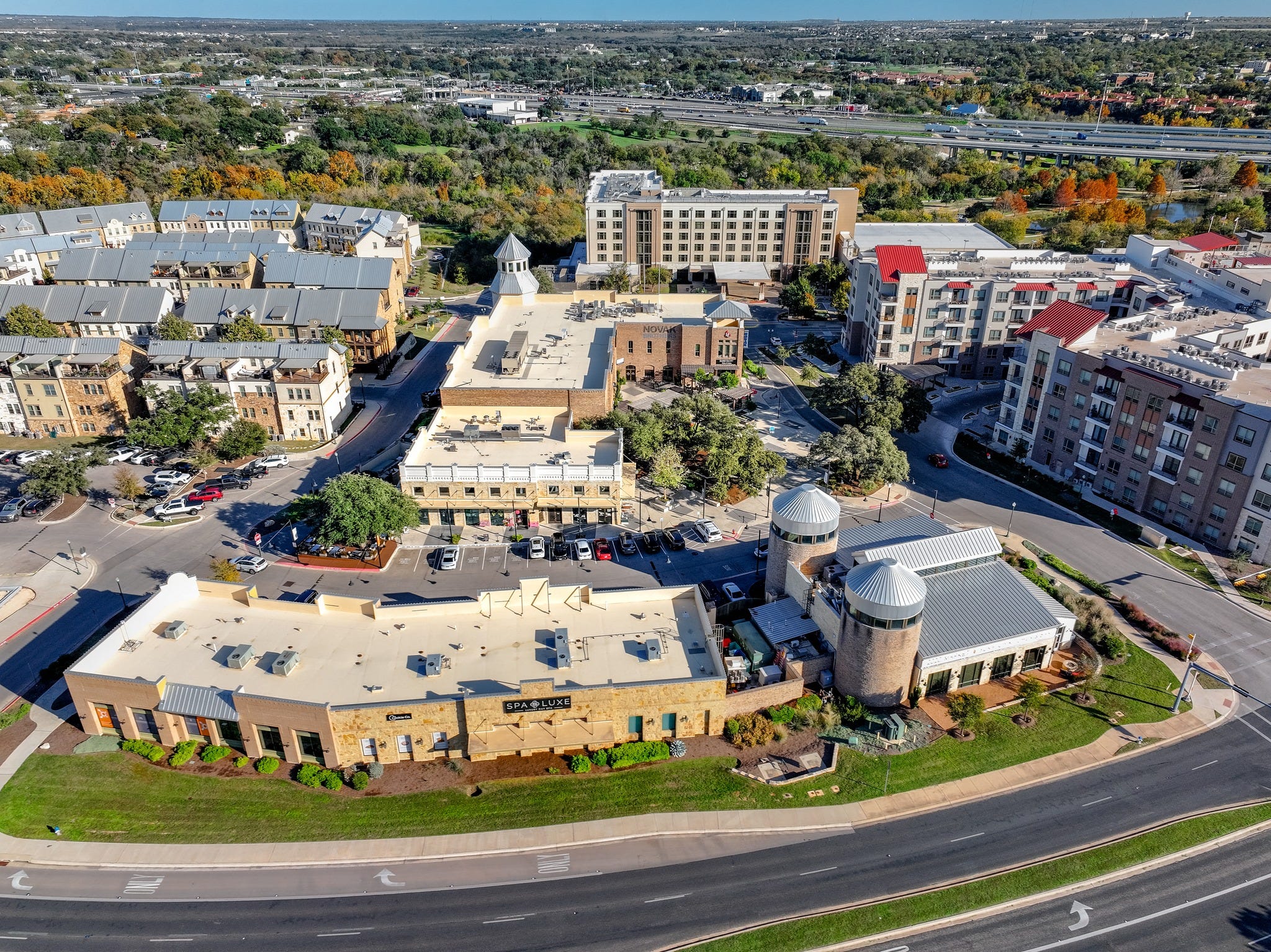
That’s why we don’t build shiny high-rise buildings. It’s also why we don’t apologize for bringing some of our very widely acknowledged development skills and adapting them to the scale on the ground for suburbs and smaller communities. That’s what Small Towns 2.0 is all about: modern lifestyles for a new future that looks back and says “that’s a great start.”
That means the future looks a lot like the past, meaning Places for People that support healthy, active, lifestyles in multi-generational, automobile-optional, walkable neighborhoods that are built to last for 150+ years. There’s lots of lousy planning that has contributed to what we see around us, and a lot of short-sighted disconnected designs that drive the wrong metrics for success. We’re saying that we can all do this better: we’d love to help figure out what that looks like in your town.
If you’re wrestling with the How, let’s help you sort out the What and the Why first, and then help build that future together.